

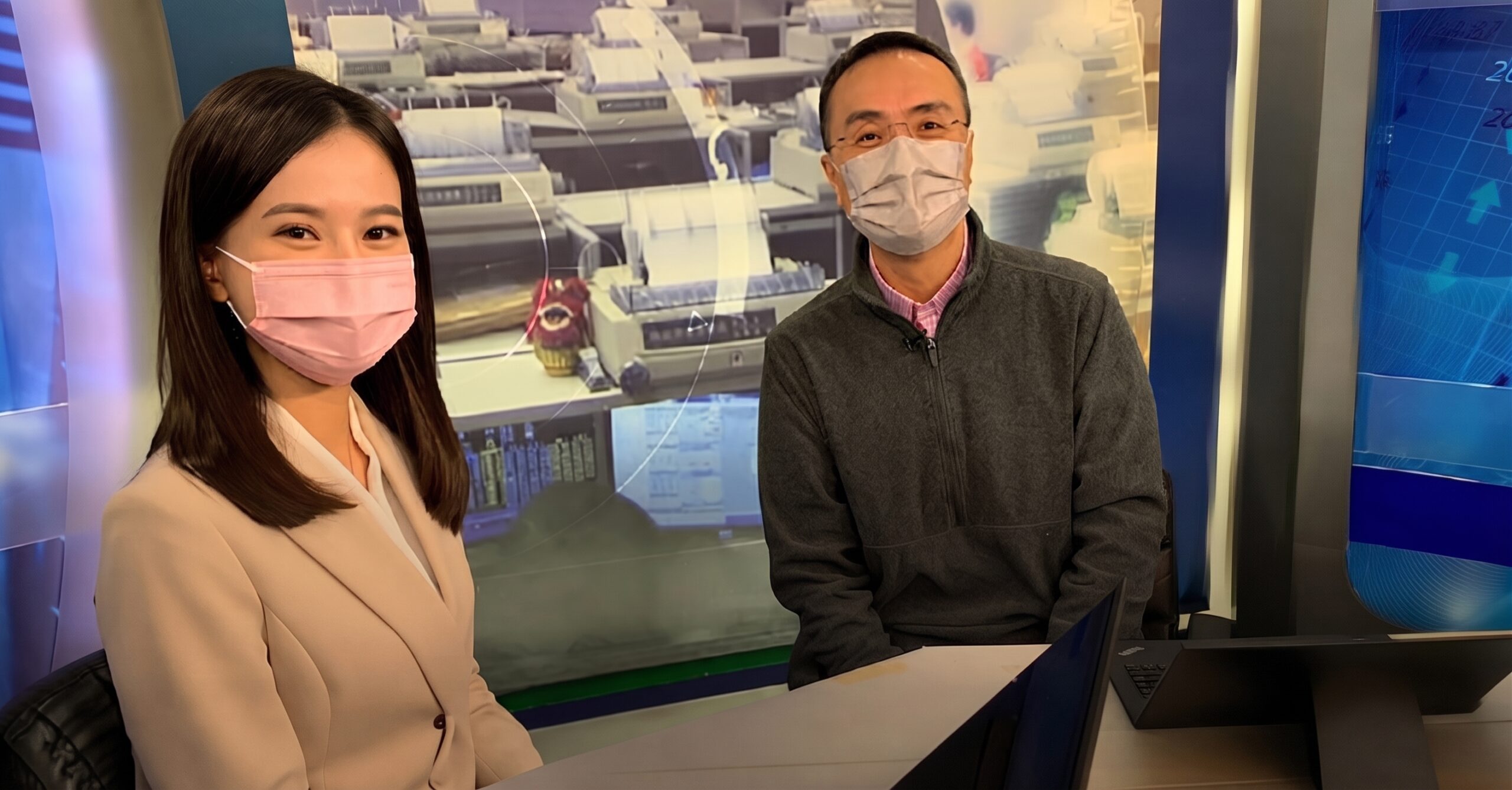
Frontline labor supply underwent a major reshuffle amidst the pandemic. When the outbreak began in 2020, a large number of workers were forced to leave hard-hit sectors such as retail, catering, and beauty, and joined industries like logistics, property management, real estate and insurance agency, and face mask production. As the epidemic eased in 2021, the economy gradually recovered and the government progressively relaxed social distancing measures, significantly boosting the public’s consumption desire and directly driving up employers’ demand for labor. Geoffrey Yau, co-founder of Moovup, was recently interviewed on the TVB program Wealth 360 to share how the frontline labor force was reshuffled amid the pandemic.
Employers’ recruitment figures began to rise steadily after the Lunar New Year in 2021, and this monthly upward pace continued until the end of the year. According to recruitment advertisement data on Moovup, a significant rebound in labor demand was clearly seen in industries such as retail, catering, production and packaging, beauty, and logistics. Due to this massive surge in demand, job seekers successively found suitable employment in the first half of 2021. Consequently, a turning point in the labor market’s supply and demand emerged in July and August, meaning the supply of labor could no longer meet employers’ demands, leaving many frontline employers deeply distressed by a severe labor shortage.
With the increased demand for labor, remuneration saw a corresponding rise. In 2021, the median starting salaries for the overall workforce increased by 3.7% (for full-time monthly salaries) and 26.4% (for part-time hourly wages) respectively, demonstrating that the part-time labor force has higher mobility, with hourly wages rising instantly upon increased demand. Among them, part-time jobs in the catering industry saw the largest increase, with the median starting hourly wage surging by 37.5% to $55 per hour.
However, by early 2022, especially after the Lunar New Year, the Omicron wave led the government to significantly tighten epidemic prevention measures, causing turbulence and growing pains in the frontline labor market. Nevertheless, based on the previous year’s trend, employers’ demand for frontline labor is expected to rebound rapidly once the epidemic subsides.
Therefore, in the face of the Omicron outbreak, we advise employers to: (1) Place greater emphasis on retaining talented employees to weather the difficulties together. Once the epidemic stabilizes, businesses can immediately capture more revenue, avoiding limitations on business growth caused by labor shortages. (2) Consider absorbing better and more labor from other epidemic-affected industries. These employers can clearly outline industry appeal, job duties, and benefits in their recruitment ads, or even use more eye-catching job titles to stand out among the competition and attract job seekers. (3) Finally, data from the Moovup platform shows that application volumes for part-time jobs are three times those of full-time jobs. According to a survey conducted by Moovup last year, nearly half of the respondents actually prefer part-time or freelance work. We therefore recommend that employers offer more flexible work arrangements during the epidemic to achieve a win-win situation.
